Why It Costs More Money to Be Broke — And the Workarounds That Actually Help
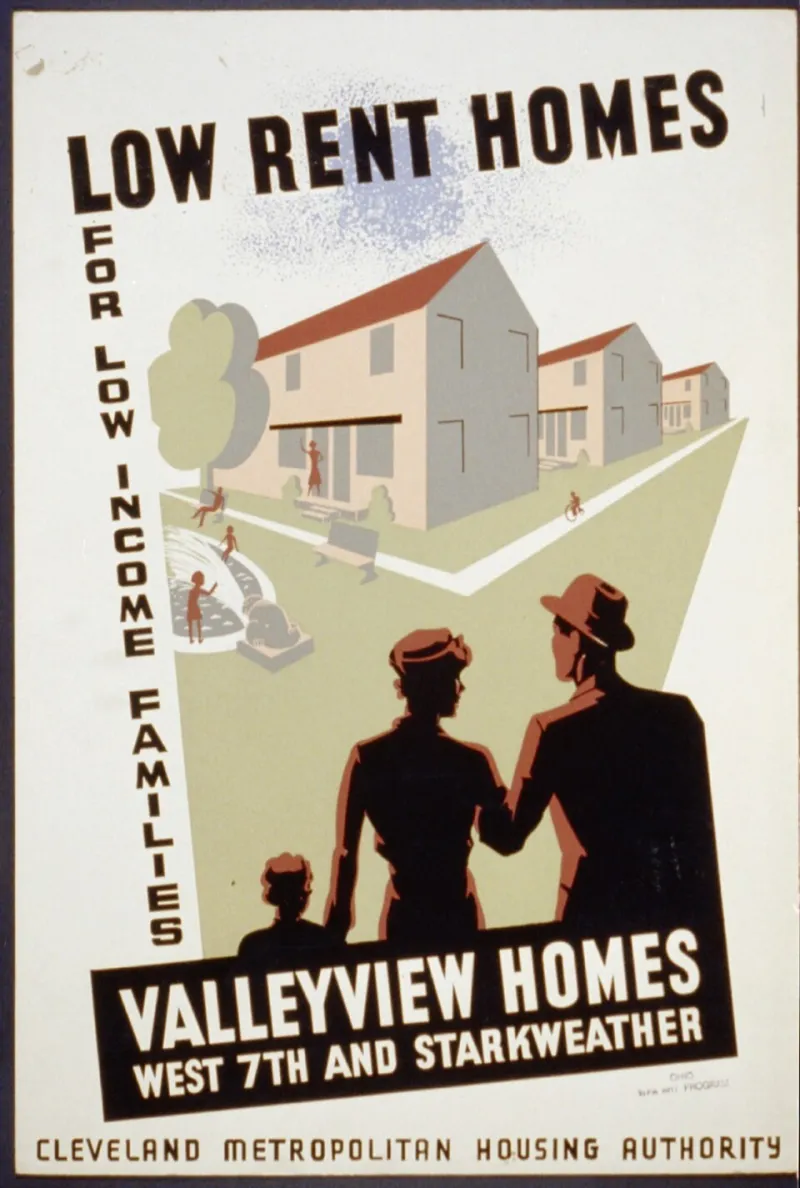
Photo: Work Projects Administration Poster Collection, Public domain, via Wikimedia Commons
Here's a sentence that should make everyone uncomfortable: in the United States, being poor is expensive.
Not in the obvious way — not just because you have less. But in a deeply structural way where the financial system actively charges lower-income households more for the same services, the same goods, and the same basic necessities. It's sometimes called the "poverty premium," and once you see it, you can't unsee it.
This isn't about blaming individuals for their choices. It's about understanding the invisible surcharges that pile onto already-tight budgets — and finding every workaround available.
The Bank That Punishes You for Being Broke
Let's start with banking, because this one hits fast and hard.
If you don't have enough money to maintain a minimum balance at a traditional bank — often $1,500 to $2,500 — you pay monthly maintenance fees. We're talking $12 to $15 a month at major institutions. That's $144 to $180 a year just for the privilege of having an account you can barely afford to keep.
Then there are overdraft fees. The average overdraft fee in the U.S. sits around $26–$35 per transaction. Studies from the Consumer Financial Protection Bureau (CFPB) have shown that overdraft fees disproportionately hit low-income account holders — many of whom are charged multiple times in a single day when their balance tips negative by just a few dollars. A $3 coffee can trigger a $35 fee. That's a 1,000% markup.
And if you don't have a bank account at all? Check-cashing services typically charge 1–5% of the check value. On a $1,000 paycheck, that's up to $50 gone before you've bought a single thing.
The workaround: Online banks and credit unions are genuinely different here. Institutions like Chime, Ally, and many local credit unions offer no-fee checking accounts with no minimums, no overdraft fees, and early direct deposit. The NCUA's credit union locator at mycreditunion.gov can help you find one near you. If you're currently paying bank fees, switching is one of the fastest free improvements you can make to your budget.
The Corner Store Tax
If you live in a food desert — a neighborhood without a full-service grocery store within reasonable distance — you're shopping at corner stores, gas stations, and small bodegas. And you're paying more for it.
A can of soup that costs $1.09 at a big-box grocery store can run $2.29 at a neighborhood convenience store. A dozen eggs that's $2.99 at Walmart might be $5.49 at a corner market. This isn't price gouging by evil small business owners (most are working on thin margins themselves). It's the result of smaller purchase volumes, less negotiating power with distributors, and higher per-unit operating costs.
The ability to buy in bulk — a Costco membership, a Sam's Club run — is a genuine financial advantage. But it requires upfront cash, a car, storage space, and the membership fee itself. None of those are guaranteed for households living paycheck to paycheck.
The workaround: Dollar stores, while controversial, often carry name-brand pantry staples at competitive prices. ALDI and Lidl, where available, offer dramatically lower prices than traditional supermarkets with no membership required. For bulk buying without the warehouse club fees, apps like Ibotta and store loyalty programs can close some of the gap. Some community organizations also run buying co-ops — worth searching locally.
Rent-to-Own and Payday Loans: Borrowing at a Premium
When you don't have savings or credit access, emergencies get expensive in a different way.
Payday loans — short-term, high-fee loans meant to bridge the gap until your next paycheck — carry average APRs of 400% or more. The typical two-week payday loan on $300 costs about $45 in fees. That sounds manageable until you can't pay it back in two weeks and roll it over. And over. And over. The CFPB has found that most payday loan borrowers end up in debt for five or more months out of the year.
Rent-to-own stores like Aaron's or Rent-A-Center operate similarly. That $500 TV might cost you $1,400 over 18 months of weekly payments. You're paying for the convenience of not needing the $500 upfront — but the total cost is punishing.
The workaround: For genuine emergencies, credit unions often offer small-dollar "payday alternative loans" (PALs) with interest rates capped at 28%. Many nonprofits and community organizations — searchable through 211.org — offer emergency assistance programs for utilities, rent, and medical costs. Buy Nothing groups on Facebook and Freecycle communities are surprisingly active in many cities for getting household goods without spending anything.
Insurance Deserts and the Credit Score Wall
Car insurance rates are legally tied to your zip code in most states. Living in a low-income urban neighborhood often means paying more for auto insurance than someone in a wealthier suburb — even with the same driving record. The same dynamic plays out with renters insurance and, in some states, homeowners insurance.
And credit scores? They're used for far more than loans now. Landlords, cell phone carriers, some employers, and even utility companies check credit. A low score — often the result of past financial hardship, not irresponsibility — can mean higher security deposits, higher rates, or flat-out denial. You end up paying more, upfront, for things that creditworthy people get on easier terms.
The workaround: For insurance, always get multiple quotes — apps like The Zebra can compare rates across carriers quickly. For credit, secured credit cards (where you put down a deposit that becomes your credit limit) are a legitimate path to building a score without taking on risky debt. Becoming an authorized user on a family member's account, if that's an option, can also move the needle.
What the System Owes You (And How to Claim Some of It)
This isn't just a personal budgeting problem. It's a policy problem. Advocacy organizations like the National Consumer Law Center and the Center for Responsible Lending work specifically on issues like predatory lending, overdraft reform, and banking access. Following and supporting these organizations — even just sharing their work — puts pressure on the systemic side of this equation.
On the practical side, here's a quick checklist of programs many low-income households are eligible for but don't always claim:
- SNAP (food assistance): Eligibility is broader than many people think. Check benefits.gov.
- LIHEAP: Federal help with heating and cooling bills.
- Lifeline: A federal program offering discounted phone and internet service.
- Free tax prep: The IRS's VITA program offers free tax filing help, and the Earned Income Tax Credit (EITC) is one of the most significant financial boosts available to working lower-income families — but it has to be claimed.
The Bottom Line
The poverty premium is real, it's documented, and it is not a reflection of poor decision-making by individuals. It's a structural feature of a financial system that was largely built around people who already have money.
Knowing it exists is the first step. Poking at every fee, every rate, every charge you're paying — and finding the alternatives — is how you start to fight back. None of these workarounds fix the system. But they can keep more money in your pocket while the bigger work gets done.